


What is a compostable bag, and are they really compostable.
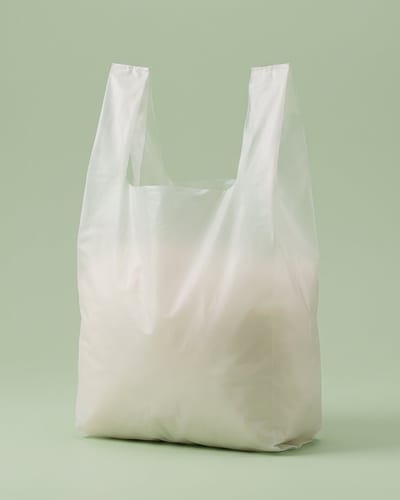
A compostable bag looks and carries like the plastic vest carrier it replaces. The word gets used loosely, so this page says what the film is made of, what the certification actually tests, and the difference between compostable, biodegradable and paper, so you can answer the question when a customer asks it at the counter.
The short answerA compostable bag is made from a plant based film, usually PLA from corn starch blended with PBAT, that breaks down into water, carbon dioxide and compost under composting conditions. It is really compostable only when the film is certified: EN 13432 in Europe and ASTM D6400 in the US require at least 90% of the material to break down within six months in an industrial composting facility, with no toxic residue. A bag sold as biodegradable with no certificate has no such test behind it.
What a compostable bag is made of
The bag on this site is a vest carrier in 18 to 25 micron film made from PLA and PBAT. PLA, polylactic acid, is a polymer fermented from corn starch. PBAT is a flexible compostable polyester blended in so the film stretches and folds like the polyethylene bag it replaces instead of cracking. Together they make a film that looks, feels and carries like a conventional carrier, and it is printed by flexo in up to two colours.
What it is not: it is not paper, and it is not a conventional plastic bag with an additive that makes it fragment. Fragmenting plastic, sold for years as oxo-degradable, breaks into pieces that do not go away, and the EU banned it in 2021. A certified compostable film breaks down into water, carbon dioxide and biomass.
What certified compostable actually tests
Compostability is a laboratory result, not a description. The European standard is EN 13432, the US equivalent is ASTM D6400, and the OK compost mark from TUV Austria certifies a film against them. They test four things:
- Disintegration: after twelve weeks in industrial composting, no more than 10% of the material is left in pieces larger than 2 mm.
- Biodegradation: at least 90% of the carbon in the film has converted to carbon dioxide within six months.
- Ecotoxicity: the finished compost grows plants as well as compost with no film in it.
- Chemical limits: heavy metals and fluorine stay under set thresholds.
The film stocks we use are EN 13432 and OK compost industrial certified, and we share the certificates for your run on request. If a supplier cannot show a certificate for the exact film, the word compostable on the bag is a claim, not a fact.
Home composting or industrial
EN 13432 describes an industrial facility: around 58 degrees, turned and managed, over twelve weeks. A garden heap is cooler and slower, so home compostability is a separate certification, OK compost HOME, tested at ambient temperature over twelve months. A bag certified for industrial composting only may not break down in a garden heap in any useful time.
Whether the film behind your run carries the home certification depends on the stock and the market. Ask with your quote and we send the current documentation for your country. That is the honest answer, and the one to give your customers.
Compostable, biodegradable, or paper
| Bag | What the word means | Where it goes after use | Where it fits |
|---|---|---|---|
| Certified compostable film | Tested to EN 13432 or ASTM D6400, certificate available | Organic waste where compostable film is accepted, otherwise general waste. Never the plastic recycling bin | Counters moving off plastic, wet and chilled goods, supermarkets |
| Biodegradable | No standard, no timeframe and no test behind the word on its own | Unknown, which is the problem | Avoid the claim unless there is a certificate behind it |
| Kraft paper | Paper, no film | Ordinary paper recycling | Takeaway, retail, anywhere a handle and a printed face matter |
The choice between compostable film and paper is usually made by what goes in the bag. Wet, chilled and loose goods want the film; dry goods and anything that needs to look expensive want paper.
Ordering and storing compostable bags
- From 10,000 units, printed by flexo in up to two colours, three weeks in production.
- Vest, patch or loop handles. The vest carrier is the supermarket standard.
- Store cool and dry and rotate the stock. The film is designed to break down eventually, so order what you use in a season rather than years of it.
- Strength is comparable to a conventional vest carrier for normal counter loads; we match the film gauge to what you sell.
The bag this applies to: the Compostable Carrier Bag. The paper alternative is the Kraft Paper Bag.
Questions
Are compostable bags really compostable?
Only when the film is certified. Real compostability is a certification, not a marketing claim: the film stocks we use are certified against EN 13432, the European industrial composting standard, and carry the OK compost mark, with ASTM D6400 equivalents for the US. We share the certificates for your run on request.
Is compostable the same as biodegradable?
No. Biodegradable says a material will break down at some point, with no timeframe and no test. Compostable means it has passed a standard: 90% biodegradation within six months under composting conditions, with no toxic residue. Every certified compostable bag is biodegradable; most bags sold as biodegradable are not certified compostable.
Can a compostable bag go in the recycling bin?
No. Compostable film contaminates plastic recycling and is sorted out. It belongs in organic waste where the local scheme accepts compostable film, and in general waste where it does not.
How long does a compostable bag last in the stockroom?
Long enough for normal use if it is kept cool and dry and rotated. It is made to break down under composting conditions, not on a shelf, but it is not made to sit in a warehouse for years either. Order what you use.
Written by the Bag Bureau production team. Last updated September 2026.