Paper bag handle types.
The handle decides how a bag feels in the hand, what it can carry and how it is thrown away. Ten are available on our paper bags. Each one is photographed here on a real bag, with what it costs you in strength, money and recyclability.
The short answerThe common paper bag handle types are twisted paper, flat paper tape, cotton rope, jute rope, PP rope, waxed cotton rope, braided paper cord, satin ribbon, grosgrain ribbon and die cut, which is a hole cut into the bag itself. Twisted paper is the strongest all paper option, rope handles carry the most weight, and die cut keeps the bag flat.
The ten handles
Each of these goes on the kraft and laminated paper bags. Every photograph is the real handle on a real bag, not a drawing.
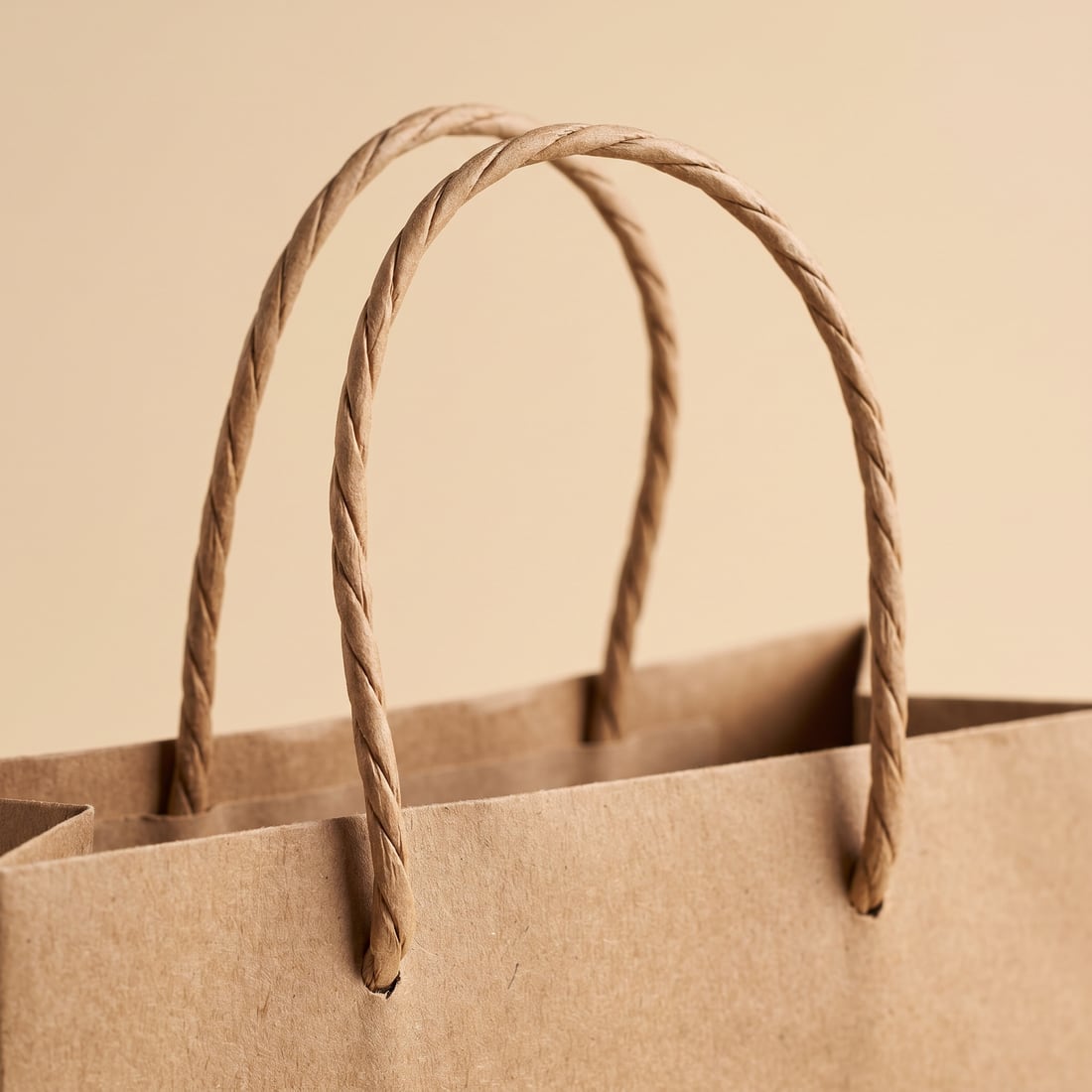
Twisted paper
Paper twisted into a cord, glued inside the top fold. The default on takeaway and retail bags: strong for its cost, and the whole bag goes into paper recycling in one piece.

Cotton rope
Soft, thick and comfortable to hold. It holds its arc when the bag is empty, which is why it is the retail default on heavier bags. Knotted or crimped inside the panel.
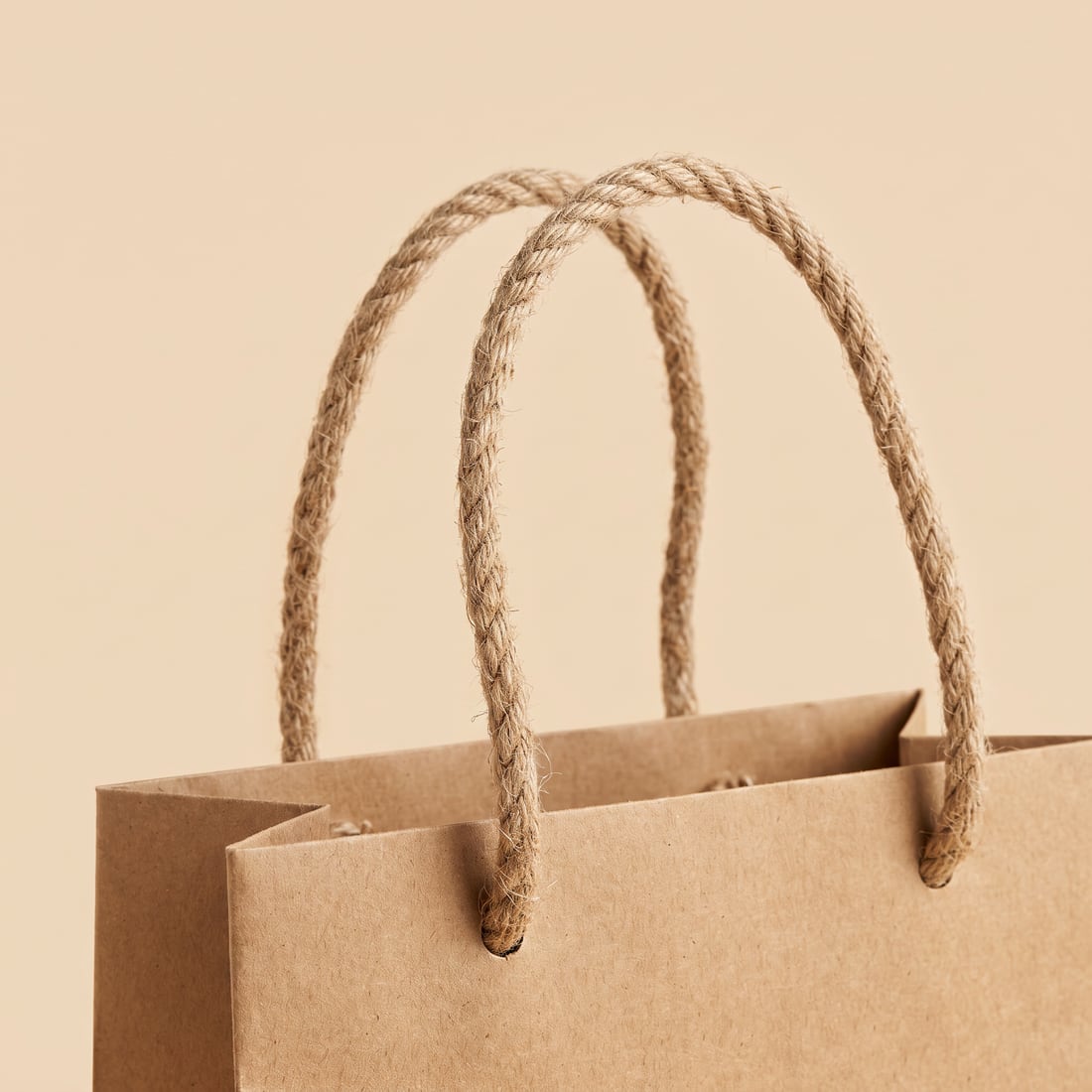
Jute rope
Coarse natural fibre with visible strands. Reads as unbleached and agricultural, which suits farm shops, delis and refill stores.
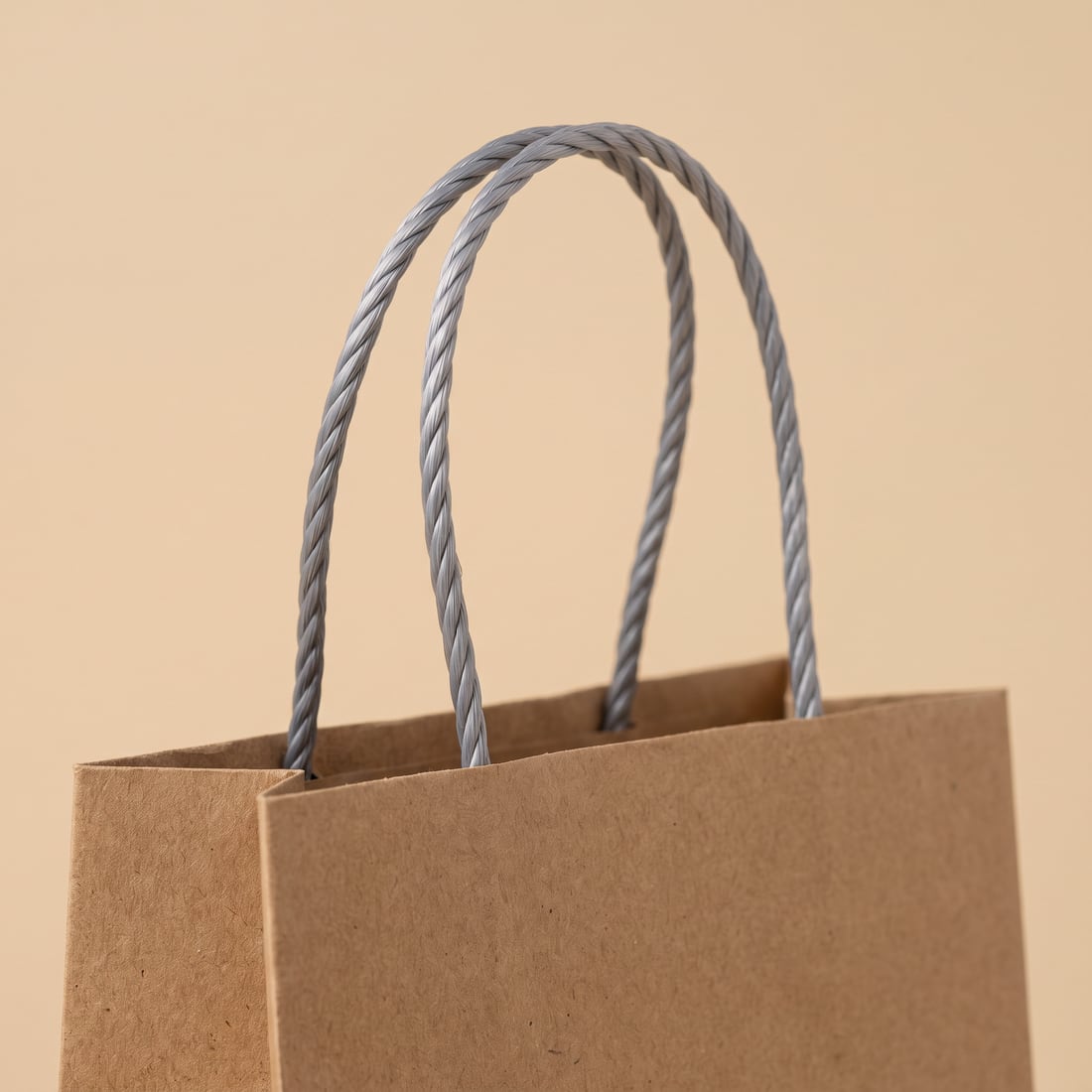
PP rope
Polypropylene rope. Smooth, waterproof, takes bright colours cleanly, and costs less than cotton. The workhorse where bags get wet.
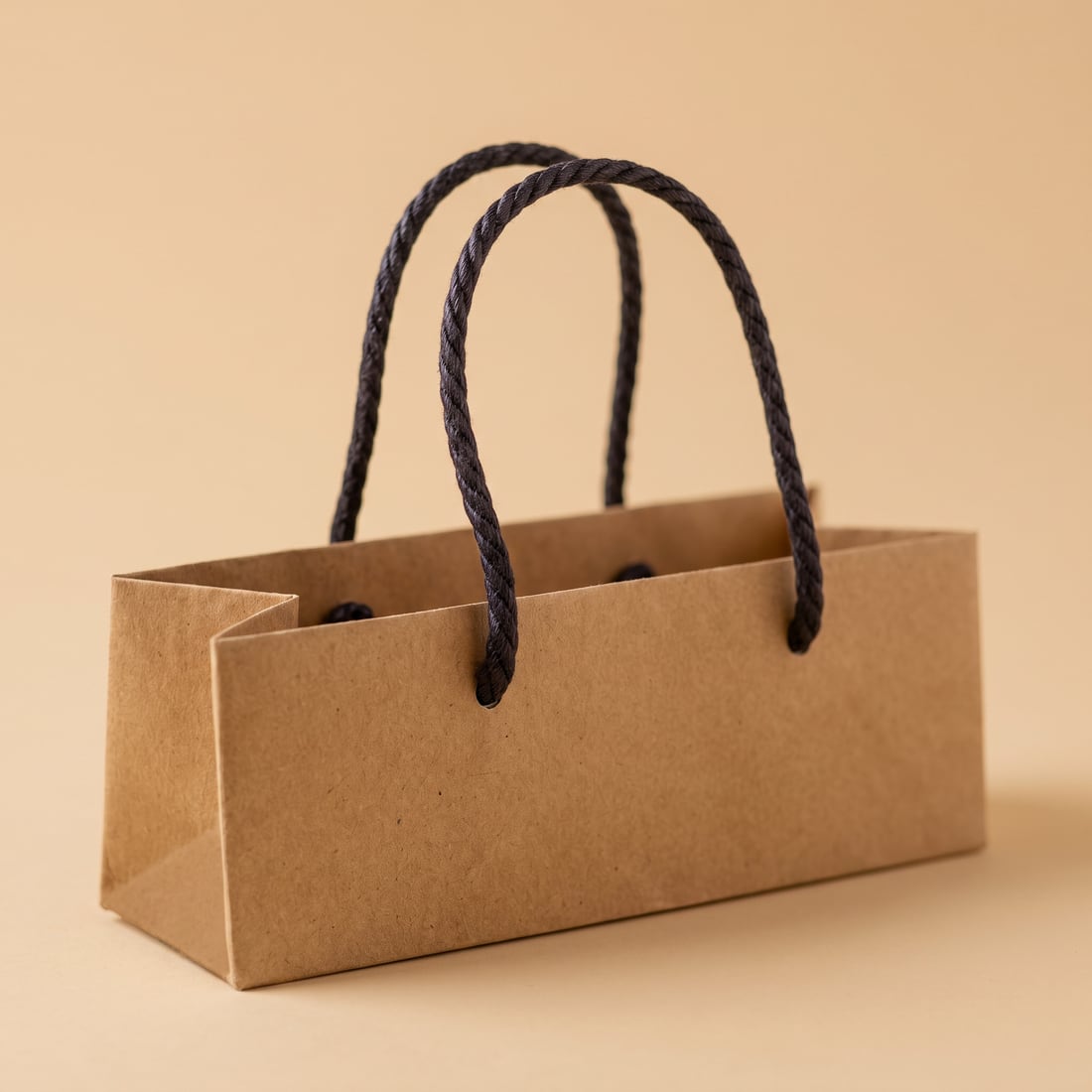
Waxed cotton rope
Cotton rope with a light wax coat. A firmer twist and a slight sheen, and it resists dirt better than bare cotton.
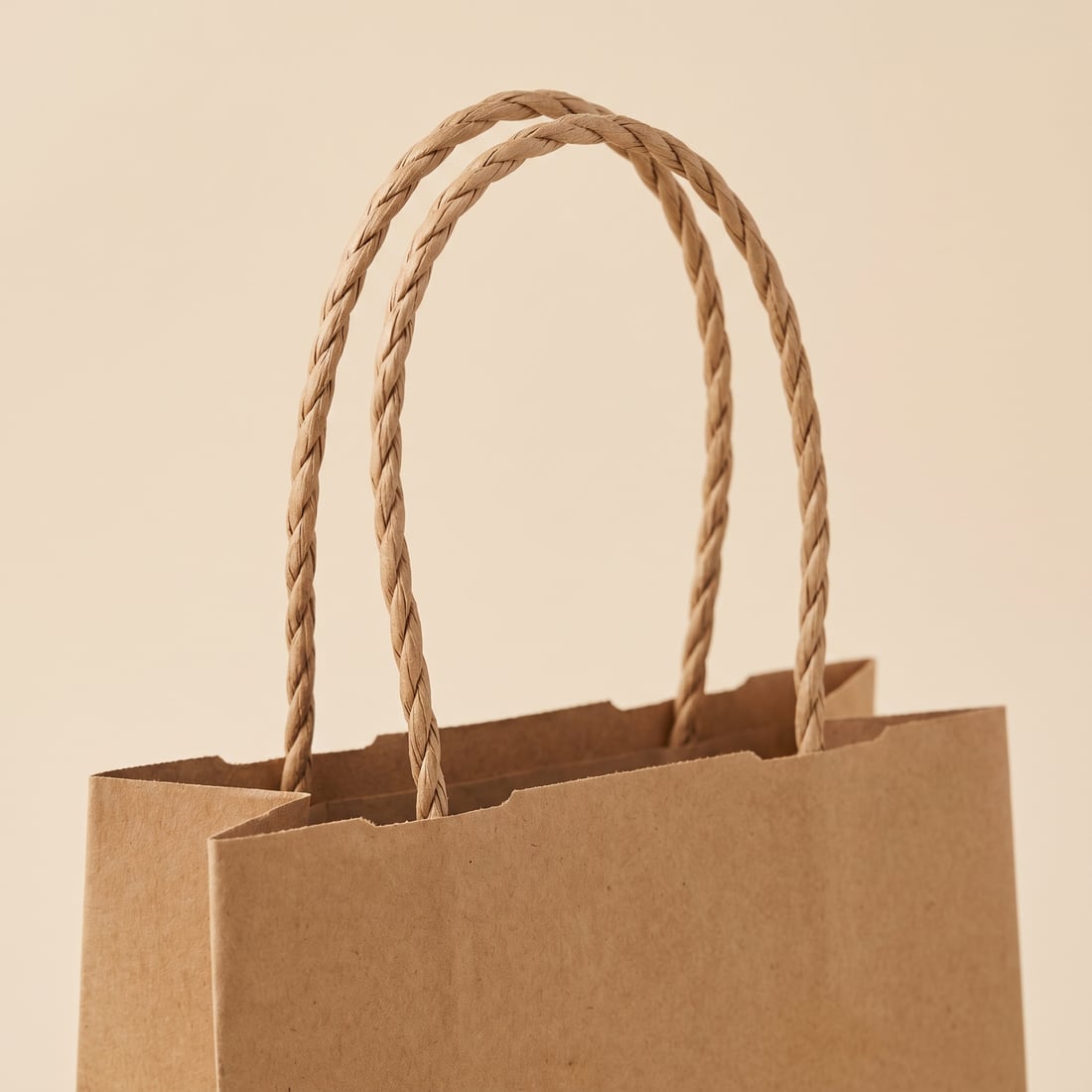
Braided paper cord
Fine plaited paper. Lighter and neater than twisted paper, and still recyclable with the bag.
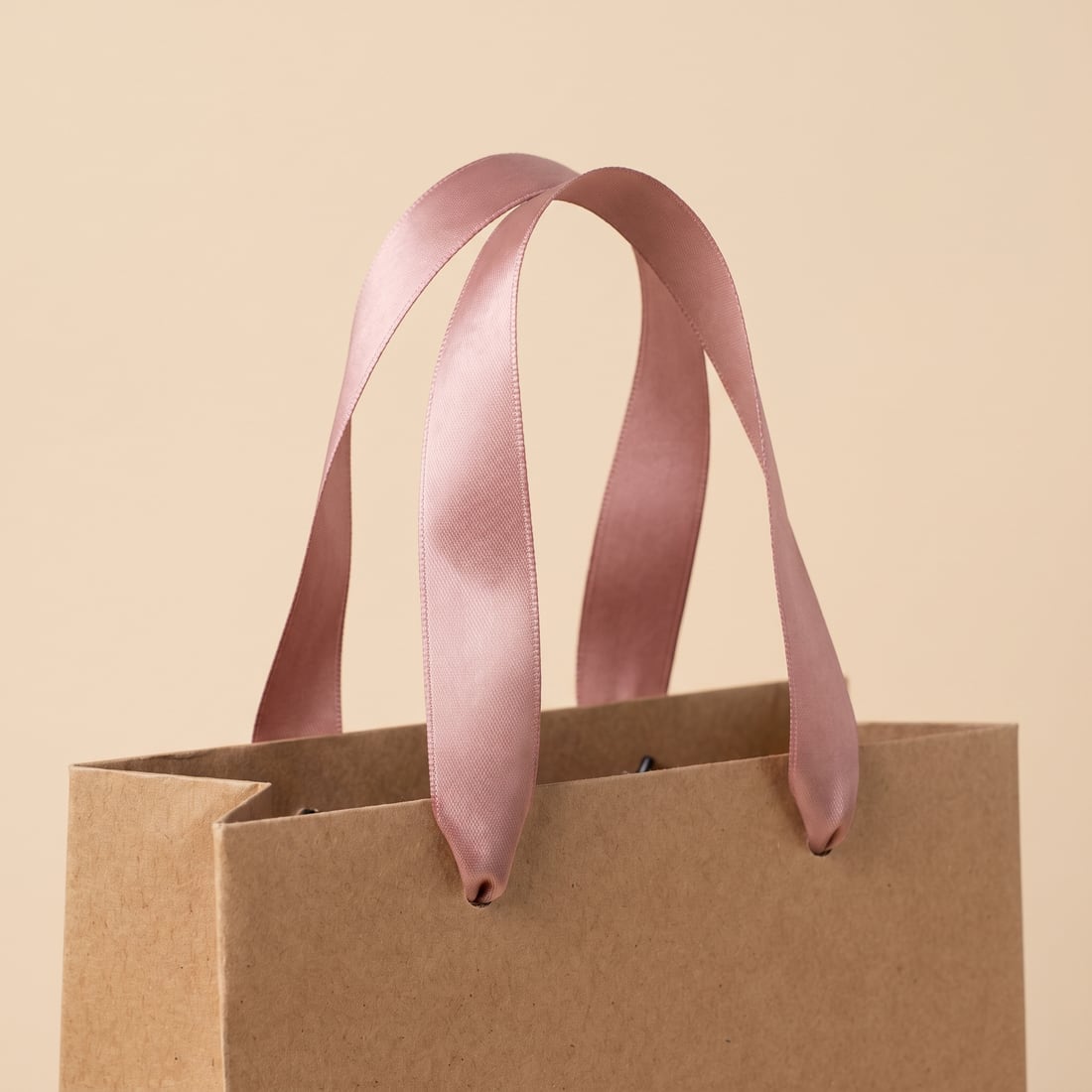
Satin ribbon
Wide and glossy, threaded through the top. It can be tied to close the bag, which is why it is common on gift and boutique bags.
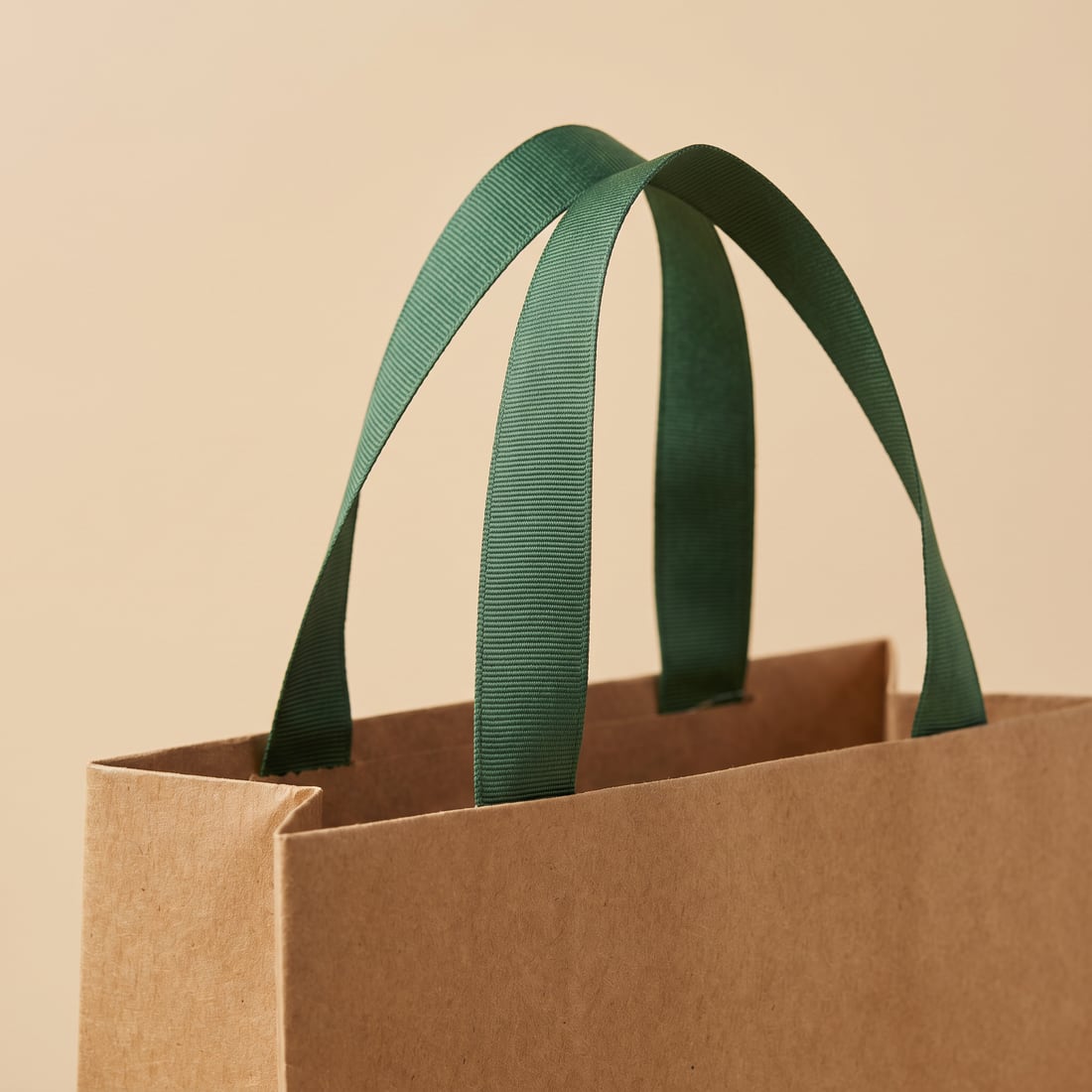
Grosgrain ribbon
Ribbed and matt. The same width as satin with none of the shine, and it holds a crease less.
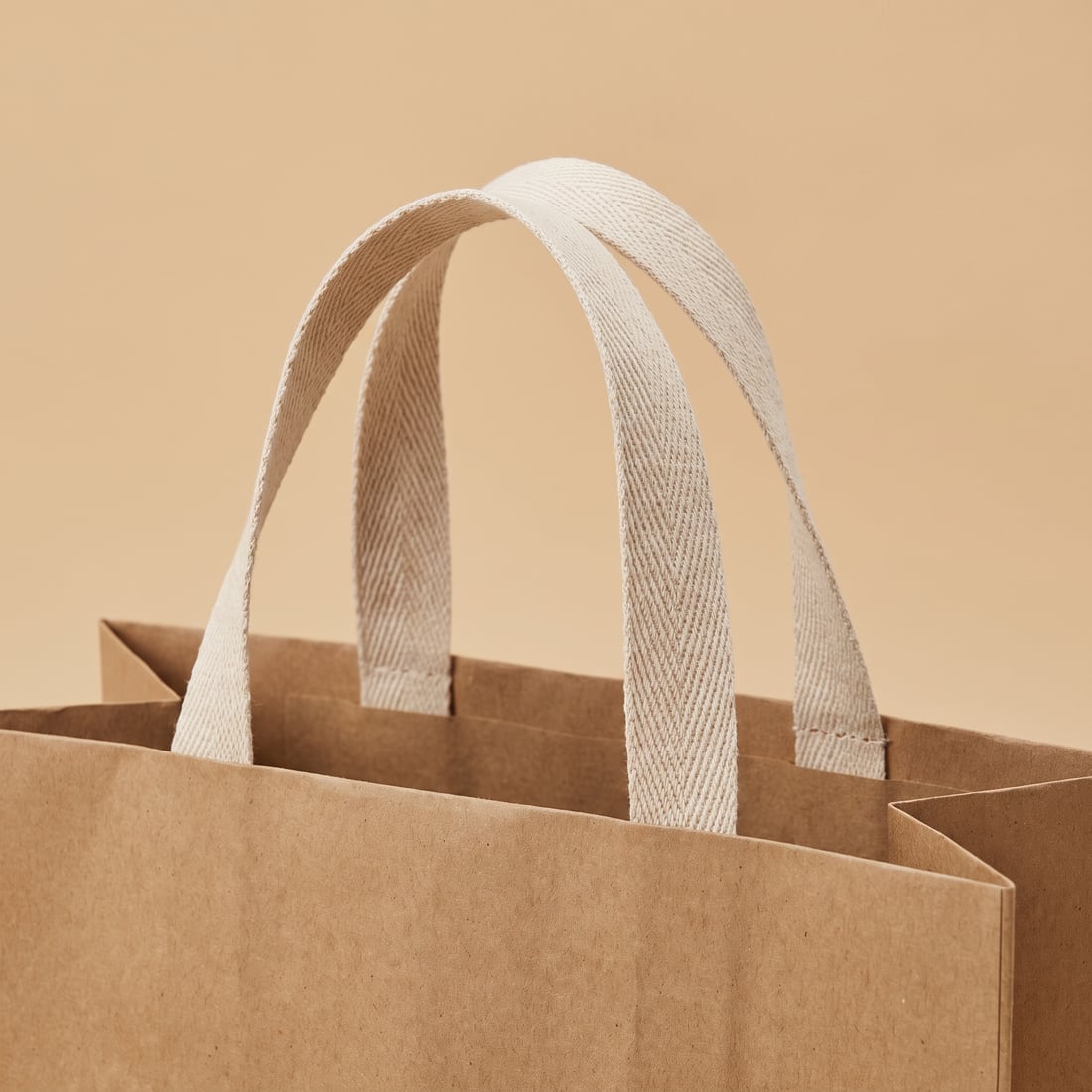
Herringbone tape
Flat woven cotton tape with a chevron weave. Soft, wide and quiet, and it sits flat against the bag.
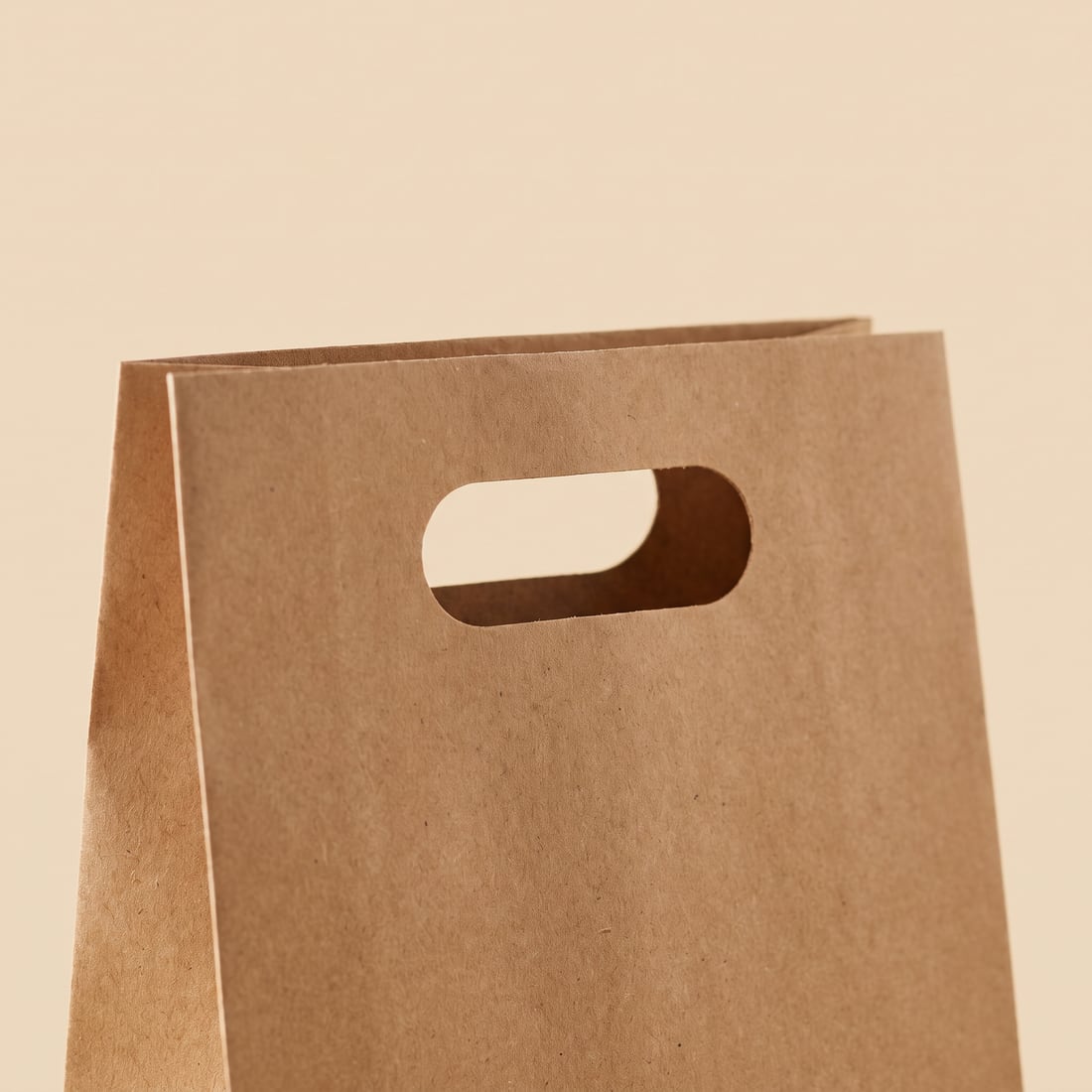
Die cut
No handle at all: an oval hole punched through the reinforced top panel. The bag stays flat, ships light and has nothing to attach, which makes it the cheapest option.
What changes on fabric and non-woven bags
The ten above are paper bag handles. A cotton, non-woven, insulated or compostable bag is built differently, so the handle is sewn or welded to the body rather than threaded or glued through a top fold. Five cover the range.
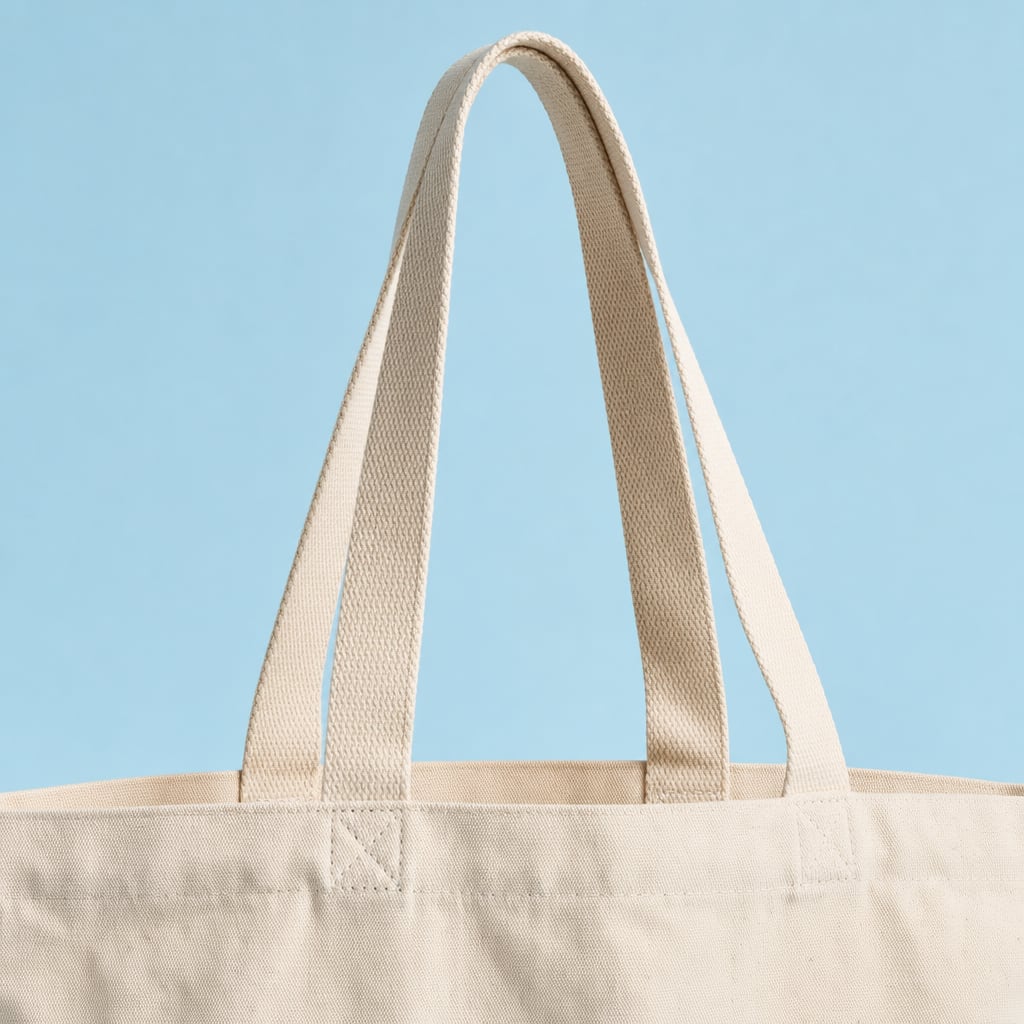
Sewn tape
Flat woven tape stitched to the bag with a box stitch at each end, the small rectangle of thread visible on the face. 63cm for a shoulder carry or 33cm for a hand carry, 2.5 or 4cm wide, in any colour, single or double thickness. The standard on cotton and non-woven bags.
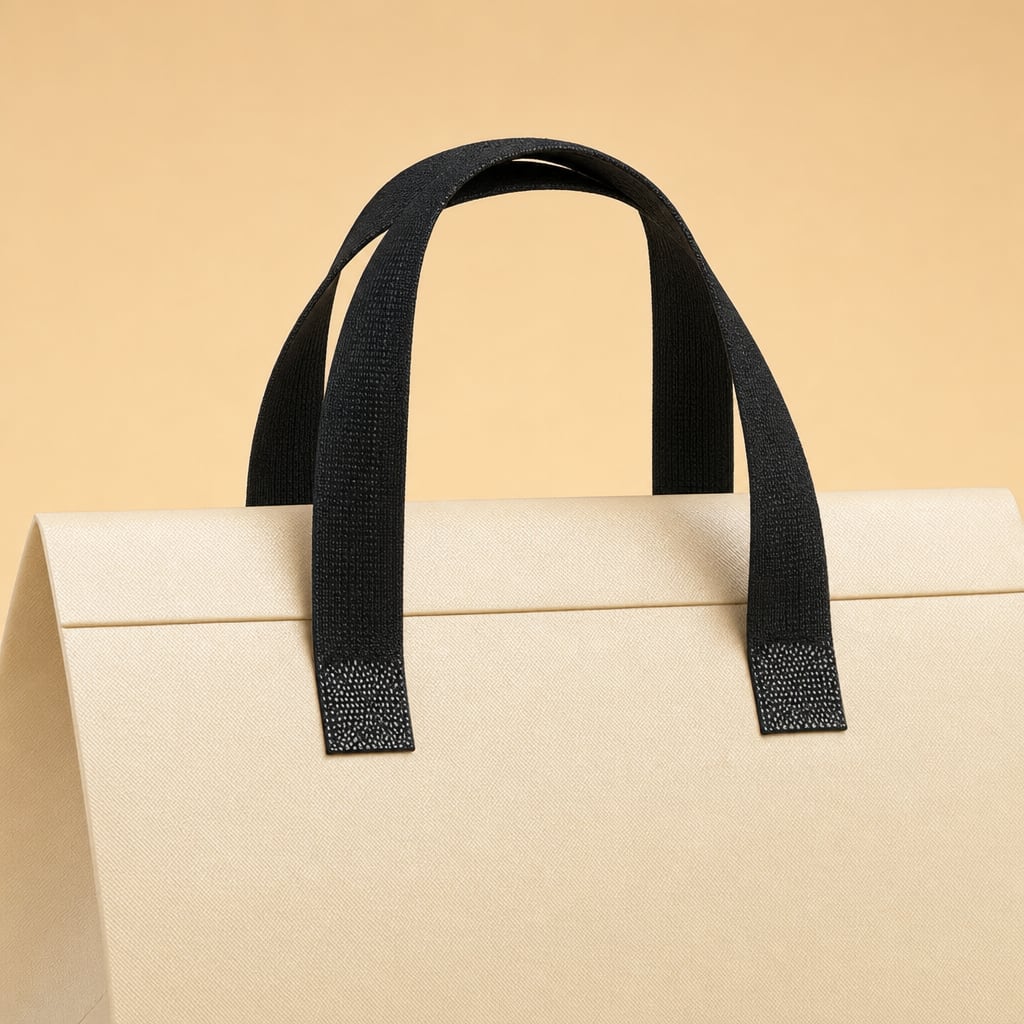
Welded webbing
Flat webbing joined to the face by an ultrasonic weld patch instead of thread. There is no stitching to unpick and no needle holes, which is why it goes on insulated bags that carry anything wet.
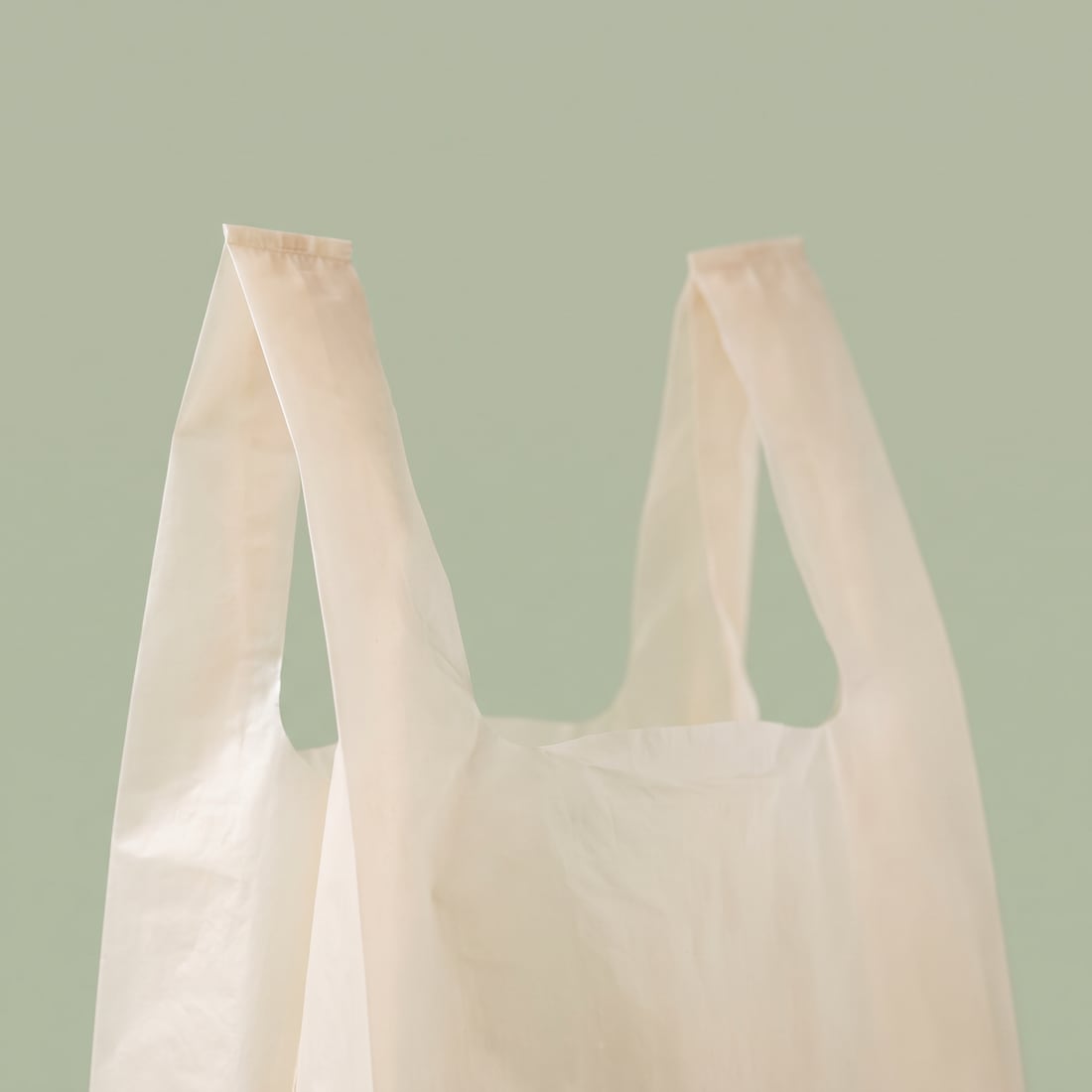
Vest
The two handles are cut from the bag itself, so nothing is added and the bag stays one material. The cheapest handle there is, and the reason a compostable carrier can still be composted whole.
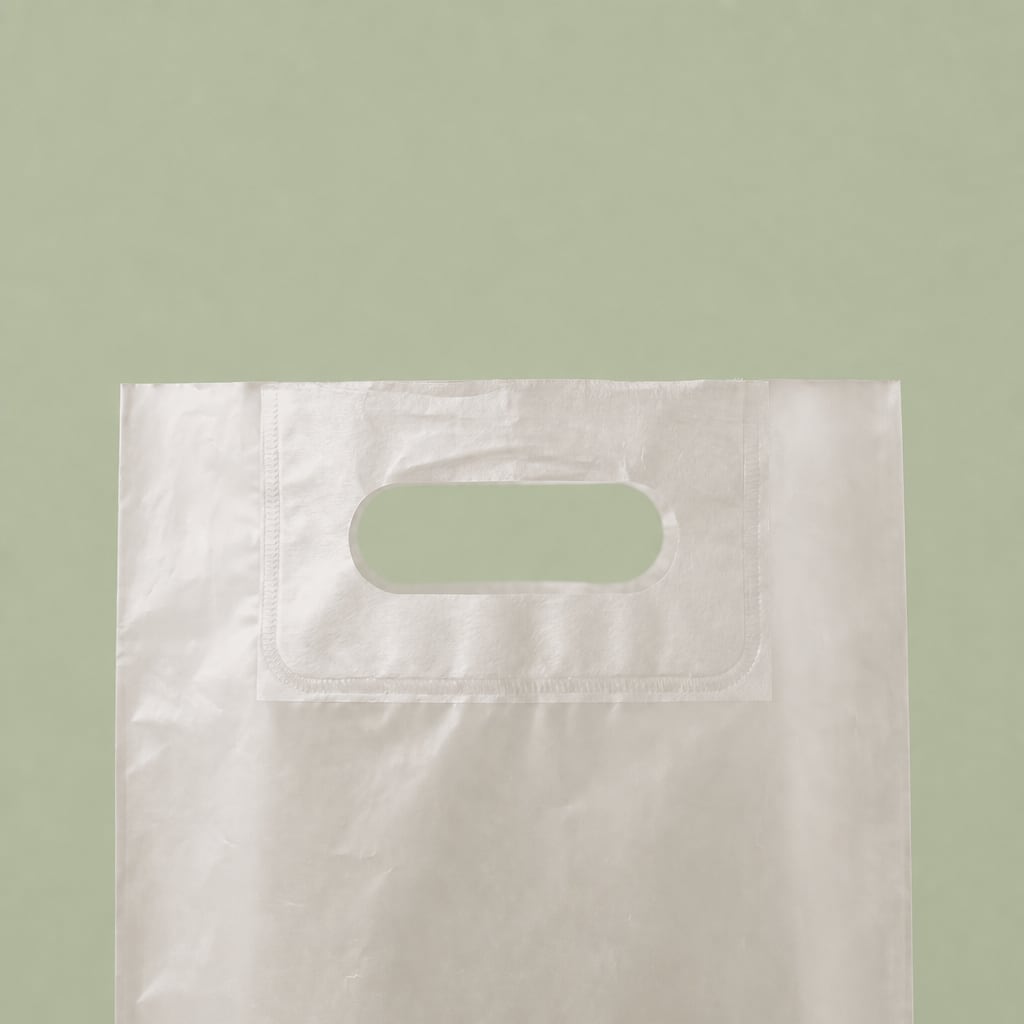
Patch
A reinforcing patch welded across the top edge with the grip punched through it. It spreads the load across the weld rather than the film, so a thin bag carries more than it looks like it should.
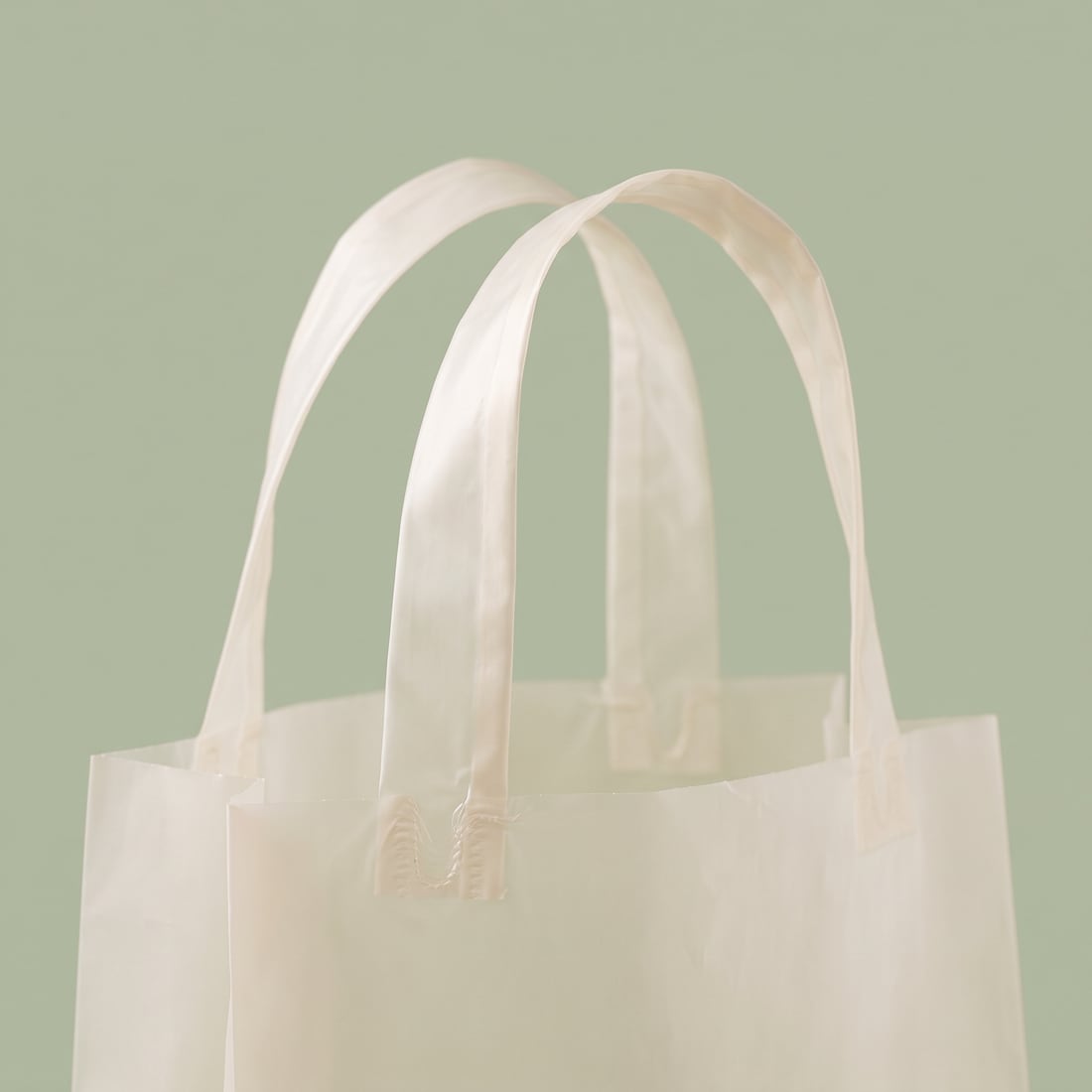
Loop
Soft loops of the same film welded to the top edge. More comfortable than a punched grip under a full load, and still one material throughout.
Which handle is strongest
Strength comes from two places: the handle itself and how it is attached. A rope handle knotted through a reinforced panel carries more than a ribbon glued to a thin one, and no handle is stronger than the paper it is fixed to. That is why the handle choice and the paper weight are quoted together.
| Handle | Carries | Feels | Recycles with the bag |
|---|---|---|---|
| Twisted paper | Everyday retail and takeaway loads | Firm, slightly textured | Yes, paper stream |
| Braided paper cord | Light to medium | Fine and neat | Yes, paper stream |
| Cotton rope | Heavier retail loads | Soft and round | Cotton is separated |
| Jute rope | Heavier retail loads | Coarse and natural | Jute is separated |
| PP rope | Heavier loads, wet conditions | Smooth and synthetic | No, remove before recycling |
| Satin or grosgrain ribbon | Light gift loads | Flat and soft | Ribbon is separated |
| Herringbone tape | Light to medium | Flat, woven, soft | Cotton is separated |
| Die cut | Light to medium, short carries | Nothing to hold but the paper | Yes, the bag is one material |
If a single stream is what matters to you, twisted paper, braided paper cord and die cut keep the bag to one material, so nothing has to be pulled off before it goes in the paper bin.
How a twisted paper handle is actually attached
The cord is not threaded through holes. A flat strip of paper carries the twisted cord, and that strip is glued to the inside of the bag under the top fold, so the pull is spread across the panel rather than concentrated at two points. That is why a machine made twisted handle bag has no visible knots and no punched holes, and why the top edge is folded over rather than cut.
Rope and ribbon handles are the opposite: they pass through punched holes and are knotted, crimped or tied on the inside. Both constructions are sound, and the choice is a look and a cost, not a compromise.
Why some bags have no handles at all
Counter bags are handed over, not carried far. An SOS block bottom bag stands square on its own base and folds flat for storage, and a greaseproof bakery bag is meant to be gripped at the top for the few steps to a table. Adding handles to either would add cost and remove the thing that makes them work, which is that hundreds sit flat under a counter.
Questions
What are paper bags with handles called?
In the trade they are carrier bags, and they are named by the handle: twisted handle bags, flat handle bags, rope handle bags, ribbon handle bags and die cut handle bags. Bags without handles are counter bags, and the square bottomed kind is an SOS bag.
Which paper bag handle is strongest?
Rope handles knotted through a reinforced top panel carry the most, with cotton and jute ahead of ribbon. Twisted paper is the strongest option that keeps the bag to a single material. The paper weight matters as much as the handle, so both are chosen together.
What is the difference between twisted handle and flat handle bags?
A twisted handle is a paper cord, round in the hand, glued under the top fold and made on an automatic machine. A flat handle is a paper tape, flat against the bag, which uses less material and lies flatter in a stack but is less comfortable under weight.
What is a twisted paper rope handle?
Paper twisted tightly into a cord, then mounted on a flat paper strip that is glued inside the top of the bag. It is the most common handle on machine made paper bags because it is strong, cheap and recyclable with the bag.
Why do some paper bags have no handles?
Counter bags are designed to be handed over and carried a short distance, and to store flat in large numbers. An SOS bag stands on its own square base, and a greaseproof bag is held at the top. Handles would add cost without adding use.
Which handles are recyclable with the bag?
Twisted paper, braided paper cord and die cut keep the bag to one material, so it goes into paper recycling whole. Cotton, jute, ribbon and PP handles are a second material and are separated first.
Which handle suits a gift bag?
Satin or grosgrain ribbon, because it can be tied to close the bag, or cotton rope where the bag is heavier. For a flatter, quieter look, herringbone tape.
Can I choose the handle colour?
Yes. Rope, ribbon and tape handles are made to your colour, and twisted paper handles are usually matched to the bag or supplied in a contrast tone. The mockup shows the combination before you approve it.
Written by the Bag Bureau production team. Last updated September 2026.